Electrical failures rarely happen without warning. A loose connection heats up. A circuit slowly becomes overloaded. A small issue quietly grows until one day it becomes a costly shutdown or worse, a safety incident.
That’s exactly why preventive maintenance standards like NFPA 70B exist. For facility managers responsible for uptime, safety, and compliance, understanding this standard is no longer optional—it’s a critical part of modern facility operations.
Understanding the Purpose of NFPA 70B
NFPA 70B is the Standard for Electrical Equipment Maintenance, designed to help organizations maintain electrical systems safely and reliably. It focuses on preventive maintenance practices that reduce the risk of equipment failure, fire hazards, and workplace injuries.
In practical terms, the standard encourages facilities to move away from reactive maintenance, fixing things after they break and toward structured inspection and maintenance programs.
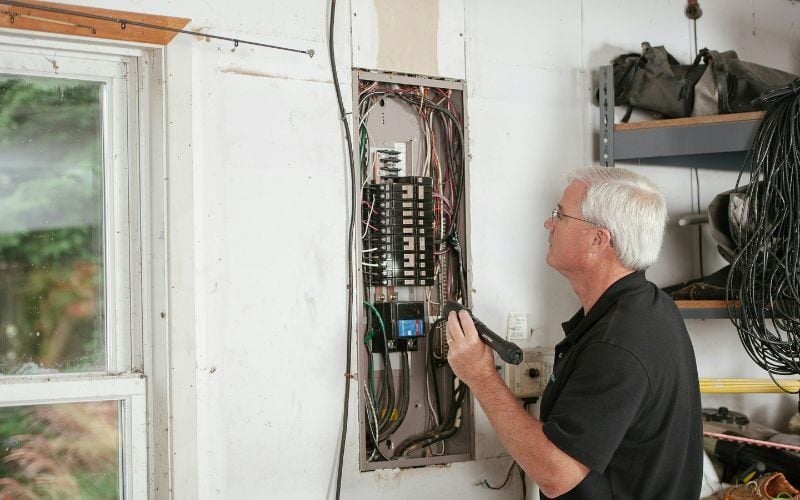
For facility managers, this means creating a documented process to inspect, test, and maintain electrical equipment regularly. The goal? Catch problems early, before they disrupt operations.
Why Preventive Maintenance Is Now More Important Than Ever
Recent updates have transformed NFPA 70B from a recommended guideline into a formal maintenance standard adopted by many organizations and regulators.
Even more important, NFPA 70B is now also being required by insurance companies before policy renewal or continued coverage.
This shift carries real implications for facilities across industries such as:
- Manufacturing plants
- Hospitals and healthcare networks
- Schools and universities
- Large commercial buildings
Many regulatory bodies and accreditation organizations now expect facilities to demonstrate structured maintenance programs aligned with NFPA 70B principles.
In other words, maintenance records are no longer just internal documents—they may become part of compliance audits or insurance reviews.
The Role of Infrared Thermography in Electrical Maintenance
One of the most powerful tools used in NFPA 70B maintenance programs is infrared thermography.
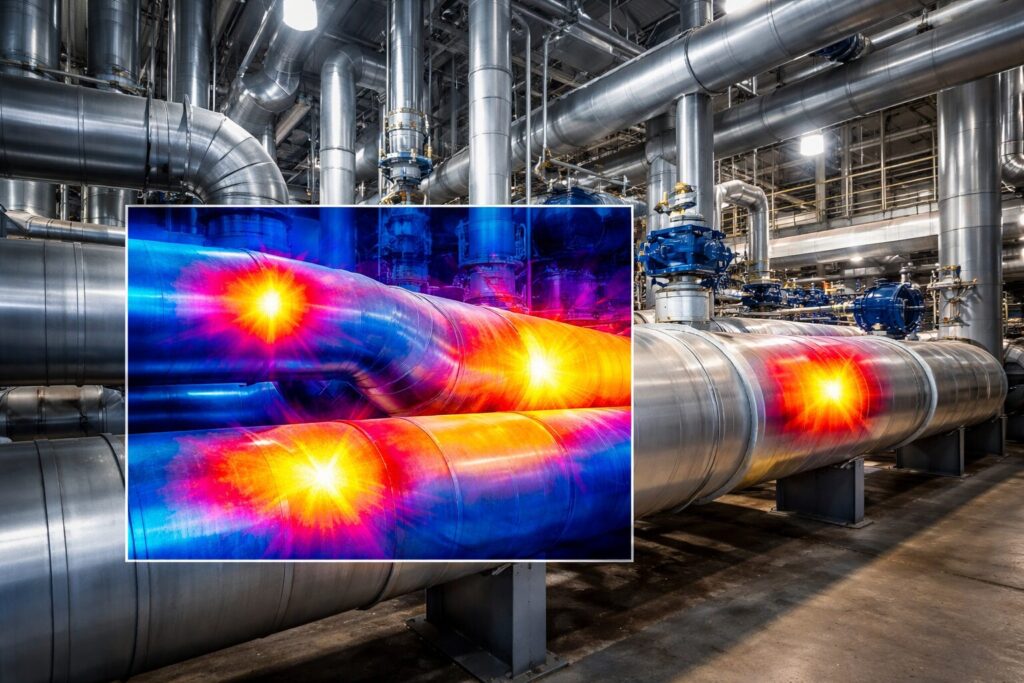
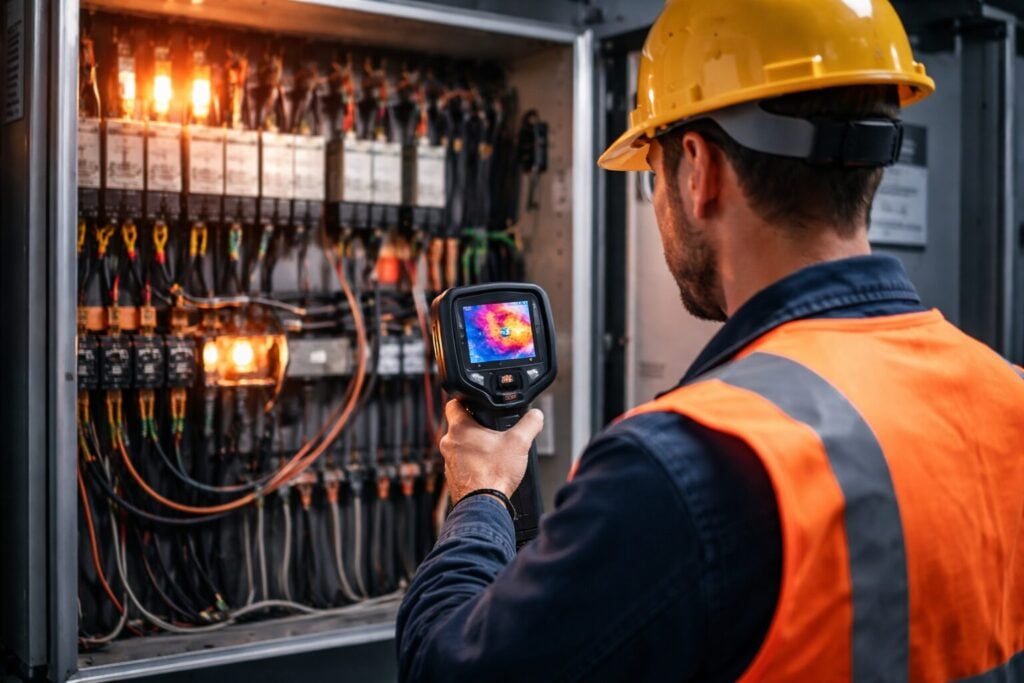
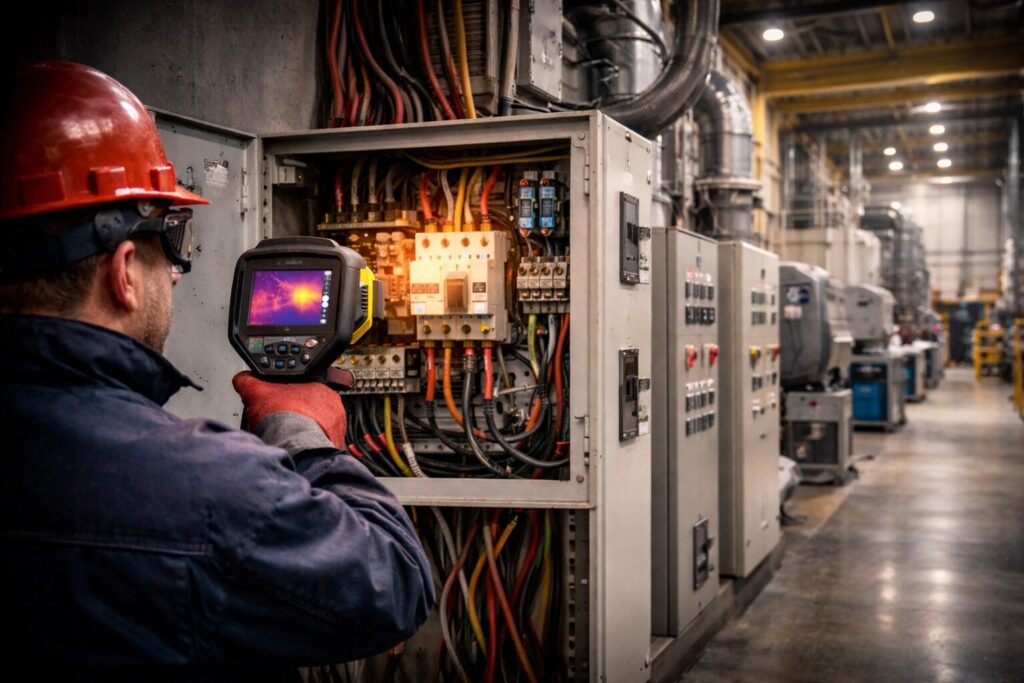
Infrared scanning allows technicians to detect abnormal heat patterns in electrical systems—often the first sign of developing problems. Overheated breakers, failing insulation, and loose connections can all be identified before visible damage occurs.
Advanced scanning technologies can reveal issues such as:
- Overloaded electrical circuits
- Loose or deteriorating connections
- Insulation failures
- Moisture intrusion or energy loss
- Mechanical equipment overheating
Because these inspections are non-invasive, they can be performed while equipment remains in operation, allowing facilities to identify risks without interrupting daily activities.
Think of thermal imaging like a medical check-up for your electrical system—it shows what’s happening beneath the surface.
Why Documentation and Reporting Matter
NFPA 70B doesn’t just emphasize inspections—it also stresses proper documentation.
Maintenance programs should include:
- Detailed inspection reports
- Thermal images and data analysis
- Corrective action recommendations
- Maintenance history tracking
This documentation provides proof that your facility is actively managing electrical reliability and safety.
For facility managers preparing for compliance reviews, dealing with insurance providers, or accreditation audits, these records become essential evidence of responsible maintenance practices.
A Preventive Maintenance Strategy That Protects Your Facility
Facility managers face constant pressure to reduce downtime, control costs, and maintain safe working environments.
Preventive maintenance aligned with NFPA 70B helps accomplish all three.
By implementing routine inspections, especially advanced diagnostic methods like infrared and acoustic scanning, organizations gain the ability to identify hidden issues early, improve energy efficiency, and avoid costly system failures.
And perhaps most importantly, these practices help protect the people who rely on your facility every day.
Final Thoughts
Electrical systems are the backbone of modern buildings, yet many problems remain invisible until it’s too late.
NFPA 70B provides facility managers with a clear framework for preventing those failures before they occur. With structured maintenance programs, certified inspections, and advanced diagnostic technologies, facilities can move from reactive repairs to predictive, reliability-focused operations.
Because in today’s environment, preventive maintenance isn’t just smart—it’s necessary for protection, compliance, and peace of mind.