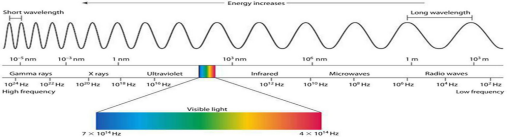
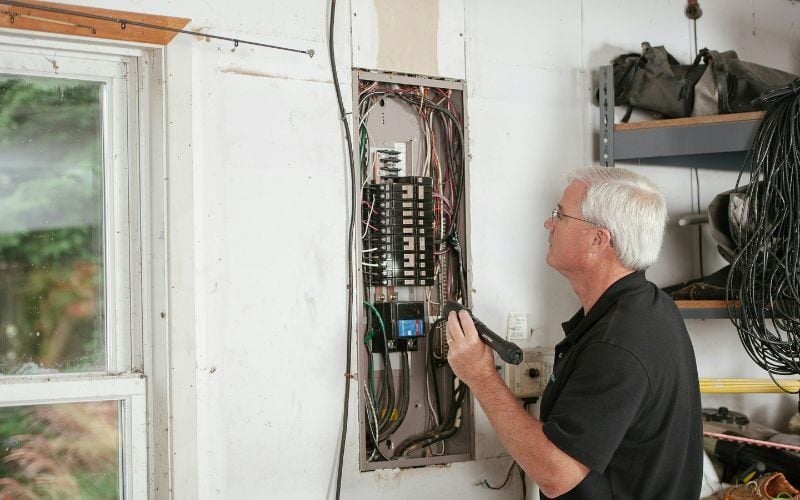
Infrared thermography is the science of capturing and analyzing thermal information from machinery using infrared cameras. Every object with a temperature above absolute zero emits infrared radiation that is invisible to the human eye but can be detected by specialized sensors and cameras.
Infrared thermography cameras capture this emitted radiation and convert it into a thermogram, or visual image, representing the temperature distribution across the object’s surface. The amount of infrared radiation emitted by an object increases as it’s temperature increases. Infrared thermographic scanning can measure these emissions across a surface making it possible to form a thermal map of that surface and identify any areas of concern.
Infrared scanning is fast, accurate, and non-destructive. It helps risk managers and company leaders better understand fire and many potential failure risks in electrical, mechanical equipment, production machinery and within many other applications. Infrared thermography inspections and thermographic scanning/testing are best carried out by a certified Thermographic Consultant with a state-of-the-art camera and other predictive instrumentation (i.e. airborne ultrasound) to show a piece of equipment’s progression toward failure.
How Infrared Thermography Works
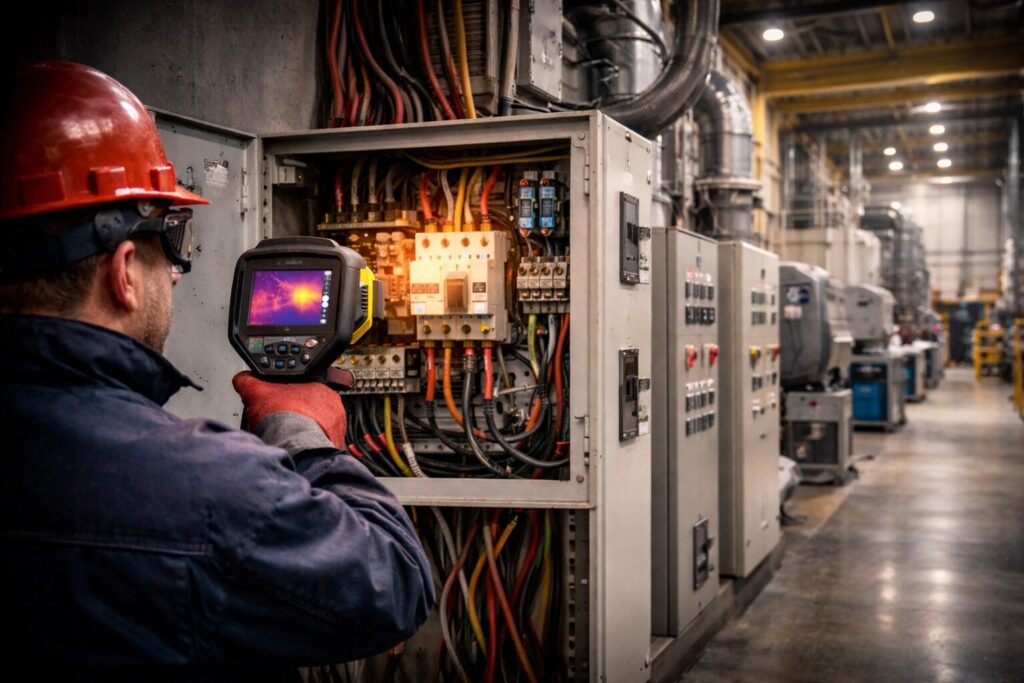
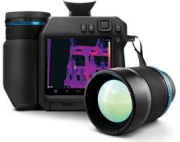
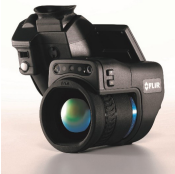
Trained professionals use properly calibrated infrared thermal imagers to detect abnormal thermal patterns, hot spots and other problems in equipment or electrical components. Infrared cameras are typically equipped with a lens, thermal sensor, processing electronics, a mechanical housing, and an LCD display.
The thermal sensor has multiple detectors, which are sensitive to infrared radiation. When pointed at an object or area:
• The infrared camera detects radiation emitted.
• The detected radiation is then converted into electrical signals. • These signals are processed to create thermographic images (thermo grams) with varying colors or intensities corresponding to different temperatures.
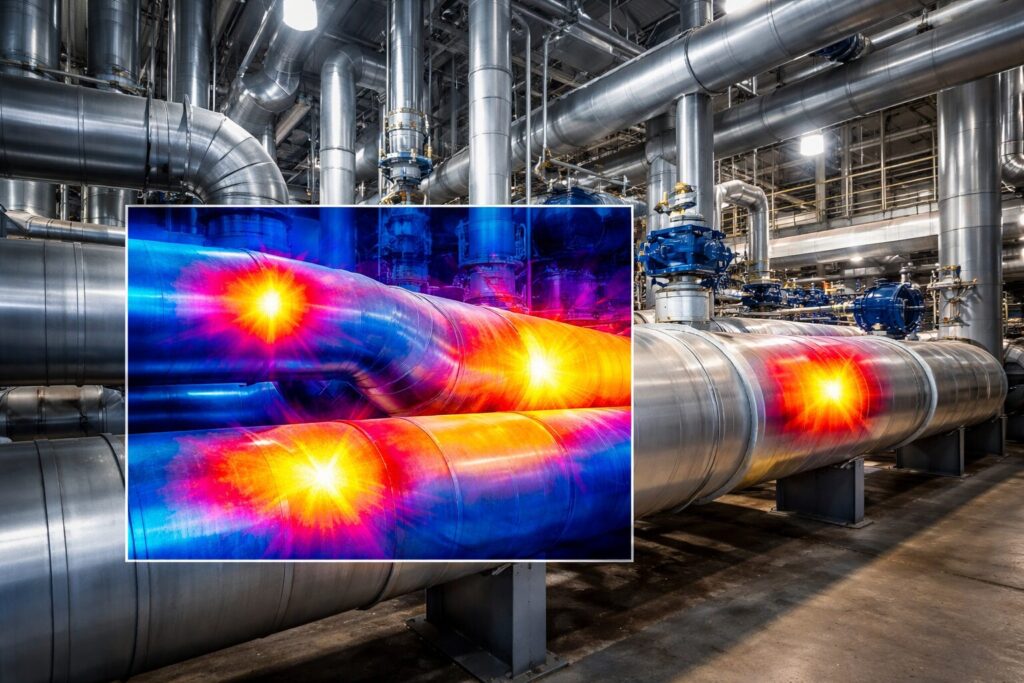
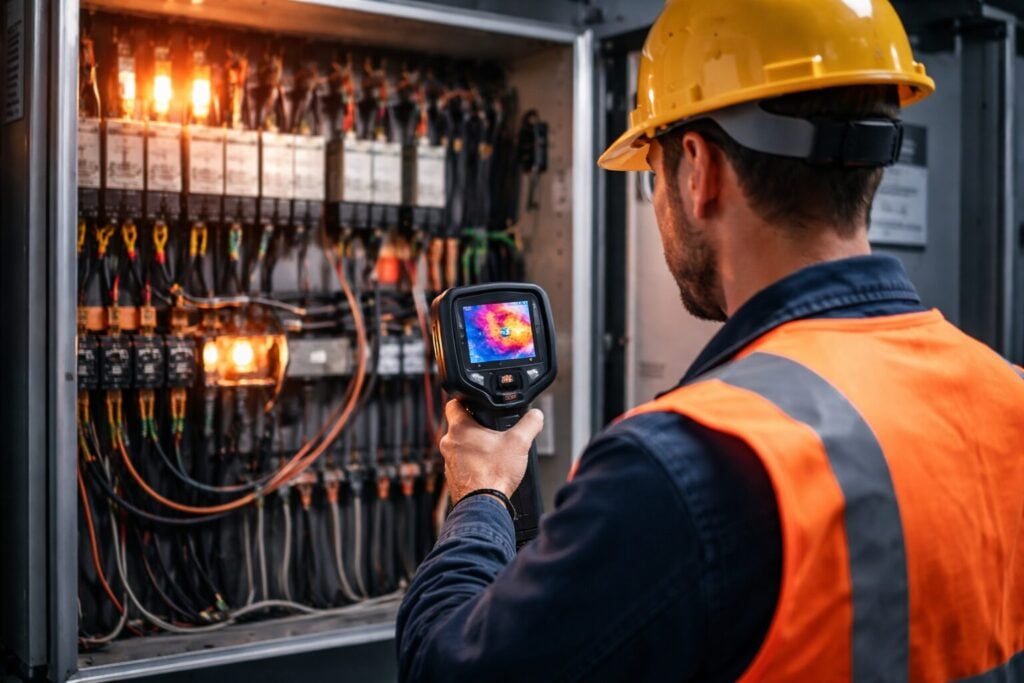
For example, in a color thermogram, warmer areas might be represented in red, while cooler areas appear in blue. Advanced cameras can also provide quantitative data, enabling precise temperature measurements from the captured image.
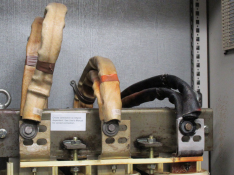
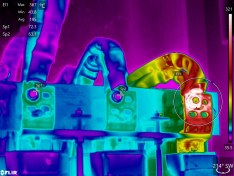
Infrared in action. These thermographic images taken by Global Risk Consultants show a deep well injection pump VFD reactor cabinet with a c-phase lug in the connection block that had heated to 360 degrees Celsius – almost 700 degrees Fahrenheit due to a loose cord and deteriorated component. Such a high temperature showed this was an imminent fire risk that needed to be mitigated quickly.
Main Use Cases for
Predictive maintenance: Thermal imaging is used to detect abnormalities in equipment, such as overheating components, which can signify impending failures.
Building inspections: Thermogra phic images can identify heat losses, moisture intrusion, and structural issues by visualizing temperature differences in walls, roofs, and floors.
Electrical systems: By monitoring electrical cabinets and components, thermography can detect hot spots caused by loose connections or overloaded circuits, preventing potential failures or fires.
Fluid systems: Infrared cameras can detect blockages or leaks in pipelines by observing temperature variations.
Roofing: Infrared imaging helps identify wet insulation in flat roofs by spotting areas of heat retention.
Risk management strategies: By understanding vulnerabilities in infrastructure displayed by infrared imaging, risk managers can implement predictive and preventative maintenance plans to reduce the risk of serious issues like fire, leaks, or machinery breakdown.
Accuracy of Infrared
The accuracy of infrared thermography depends on the expertise of the thermographer and the quality of thermographic imaging camera used. Cameras can range from a few hundred dollars to the tens of thousands.
High-quality cameras can measure temperature with an accuracy of ±2% or better. The range of accura cy, spot size, and resolution between high-end and low-end cameras is astronomically different.
Expertise is also a critical factor in the accuracy of infrared thermography. It’s important that thermographers and professionals have proper training.
Even the most sophisticated cameras will only provide the right accuracy if the right input data is loaded by the thermographic consultant. Some additional factors can influence accuracy (all not included) are:
Distance: The farther the camera is from the target, the more potential there is for measurement errors. Emissivity: Different materials emit infrared radiation differently. Ensuring the correct emissivity setting on the camera is crucial.
Atmospheric conditions: Factors like humidity, air temperature, and intervening obstacles can influence readings. Camera calibration: Regular calibration ensures the camera maintains its accuracy.
Benefits of Infrared
Electrical and mechanical infrared thermography inspections are the single most preventative/predictive measure a business can implement. Here are just some of the benefits of using the technology:
Non-destructive testing: As a non-contact, non-invasive method, infrared thermal imaging (scanning doesn’t interfere with the operation of equipment, ensuring there’s no downtime during inspection.
Cost-effective: By identifying potential problems early, thermal imaging can prevent expensive breakdowns and maintenance, bottleneck disruptions, and unplan ned outages. In most cases, infrared thermography delivers savings many times greater than initial invest ments.
Comprehensive visualization: Infrared thermography provides a visual representation of temperature discrepancies. This visual aid makes it easier for technicians and maintenance personnel to locate and address problem areas. Quick and efficient: Thermographic inspections cover large areas in a short time, making it possible to assess multiple systems or vast facilities quickly.
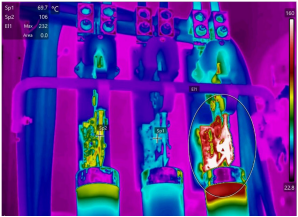
Infrared in action: Global Risk Consultants discovered this loose, deteriorated connection on a fuse clip with a very high temperature. The compressor was near failure which would have led to a long downtime for the company had it not been identified and mitigated.
Improved safety: By detecting issues like overheating early, it can help prevent unplanned disruptions, electrical/mechanical equipment from breaking down, failure, or fires.
Enhances preventive maintenance: With the ability to detect issues before they escalate, infrared thermography complements preventive maintenance strategies, ensuring the longevity and optimal performance of assets.
Versatility: Infrared imaging can be applied to a myriad of scenarios, from checking the insulation in buildings to monitoring the health of electrical circuits or even assessing human body temperature in medical applications.
Eco-friendly: By aiding in the detection of energy wastage due to poor insulation or system inefficiencies, thermography inspections can contribute to more energy-efficient operations, reducing the carbon
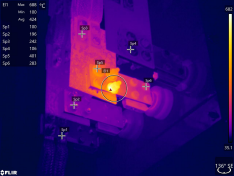
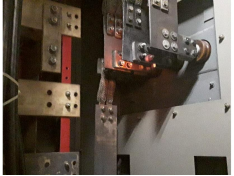
Infrared in action: When Global Risk Consultants examined this switchgear, we noticed an imminent failure with muti-million-dollar damage potential. The bolted bus bar registered a temperature of 688°C which means that the equipment was near failure and almost led to a near total plant shutdown.
Finding Invisible Threats
Not only can modern thermal imagers see in real-time, but they can also record infrared images and measure the temperatures of target objects with overall
precision. Points of possible concern show up clearly as hot or cold spots in relation to their surroundings and other similarly loaded objects.
One of the first indications that an object is trending to failure is a change in a readily-observable physical condition: temperature. Operating an electric motor at 10°C rise above the specified normal ambient operating temperature specified by the manufacturer, may reduce its lifespan by approximate ly 50%. This reduction in the expected life of the motor repeats itself for every 10°C, a phenome non also known as the “motor half life” rule. Approximately 30% of all motor failures are the result of insulation breakdown or failure, caused by excessive heat inside the motor.
A temperature increase can result in electrical connections becoming loose, leading to an increased flow of electrons to the point that it manifests a change in resistance. A high contact resistance loss within an electrical circuit resulting from a loose electrical cable lug will operate with higher than normal energy consumption losses. Similarly, an increase in friction on a bearing, belt, or conveyor can be identified quickly with the help of an infrared imager, and a repair can be scheduled immediately.
What Do Infrared Surveys Include?
1. Consultations with business owners
Problem areas are diagnosed, and their severity in electrical systems, mechanical equipment are determined.
2. Visual examination
Variances and deficiencies are addressed by identifying sources of non-uniformity of temperature within process applications.
3. Airborne ultrasound inspection
Supplementary to Infrared Thermography, Airborne Ultrasound Inspections detect potential acoustic emissions which cannot always be detected thermally.
4. Comprehensive reports and critical sharing of anomalies
Businesses are immediately informed through reports and critical sharing of anomalies requiring attention to allow for swift remediate action to be taken.
5. Notification of severity and impact ratings
Businesses are notified of the severity and impact ratings for each finding, with the summary of findings, equipment inventory listing, trending and business impact.
6. Personnel training
In-house Thermographic Consultants are trained to ensure they’re familiar with the knowledge required to identify anomalies and technological advances in infrared.