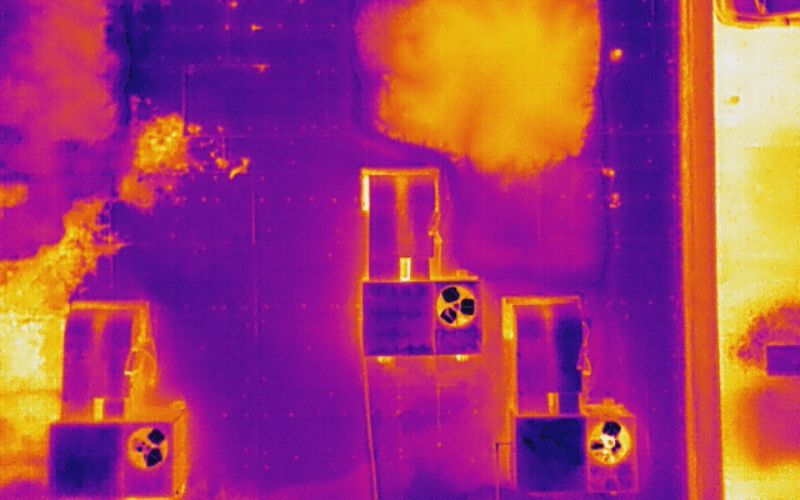
Flat roofs are durable, cost-effective, and commonly used on commercial and residential buildings. However, their low-slope design makes them especially vulnerable to hidden moisture intrusion. Water can travel beneath the roofing membrane, spreading far from its original entry point—making traditional visual inspections unreliable. By the time leaks become visible inside a building, significant damage has often already occurred.
A flat roof infrared inspection provides a proven solution. At Southeast Infrared, we use advanced thermal imaging technology to detect trapped moisture early—before it leads to structural deterioration, insulation failure, mold growth, or expensive repairs. As a non-invasive and highly accurate diagnostic method, infrared inspection is considered the gold standard for evaluating the condition of many low-slope roofing systems.
Why Flat Roofs Benefit from Infrared Inspection
Unlike steep-slope roofs, flat and low-slope roofs tend to retain water longer. Over time, this increases the likelihood of moisture becoming trapped within the insulation layers. Traditional inspections typically rely on visible indicators such as surface damage or interior staining, which usually appear only after the problem has progressed.
A flat roof infrared inspection identifies temperature differences caused by moisture beneath the roof surface. This allows building owners to locate hidden problem areas early and address only the sections of the roof that require repair—saving time and money.
Roofing Materials and Infrared Inspection Suitability
Not all roofing materials respond the same way to infrared scanning, and understanding this is critical for accurate results.
Great candidates for infrared inspection include:
- TPO roofing systems
- EPDM (rubber roofs)
- Asphalt roll roofing
- Built-up roofing (BUR)
- Modified bitumen systems
These materials absorb and release heat predictably, allowing trapped moisture to create clear thermal patterns that infrared cameras can detect.
Low-slope metal roofs, however, are not ideal candidates for infrared inspections. Metal reflects heat differently and cools rapidly, making it difficult to distinguish moisture-related temperature anomalies. For metal roofing systems, alternative inspection methods are typically more effective.
Key Benefits of Flat Roof Infrared Inspection
1. Detects Hidden Moisture Before Damage Spreads
Infrared cameras reveal subtle thermal variations caused by wet insulation—issues that are completely invisible to the naked eye.
2. Reduces Repair Costs and Extends Roof Life
Early detection allows for targeted repairs instead of full roof replacements, preserving both the roofing system and budget.
3. Non-Destructive and Efficient
Infrared inspections require no cutting, drilling, or disruption to the roof surface during the initial scan.
4. Ideal for Large Commercial Buildings
Warehouses, schools, retail centers, office buildings, and industrial facilities benefit from the ability to scan large roof areas quickly and accurately.
How Flat Roof Infrared Inspection Works
Infrared roof inspections rely on science-based thermal behavior. During the day, roofing materials absorb heat. After sunset, dry areas cool faster than areas containing trapped moisture. This temperature difference creates visible thermal anomalies.
Step 1: Infrared Thermal Scan
Inspections are performed under optimal conditions—typically in the evening—when heat release patterns are most pronounced.
Step 2: Identification of Suspect Areas
Thermal images highlight areas where moisture may be present beneath the roofing membrane.
Step 3: Verification Through Core Sampling
When moisture is detected, findings are typically verified through core samples, not moisture meters alone. These samples are performed by a qualified roofing contractor, ensuring accuracy without compromising roof integrity.
Step 4: Detailed Reporting and Recommendations
You receive a comprehensive report with thermal images, annotated findings, and clear repair recommendations to support informed decision-making.
Signs Your Flat Roof May Need an Infrared Inspection
You don’t have to see an active leak to have a moisture problem. Consider scheduling a flat roof infrared inspection if you notice:
- Ponding water or poor drainage
- Soft or spongy roof sections
- Interior water stains or ceiling discoloration
- Rising energy costs
- A roof system over 10 years old
- Recent storm or wind damage
Proactive inspections help maintain roofing warranties, prevent structural issues, and protect your investment.
Why Choose Southeast Infrared for Flat Roof Inspection
Southeast Infrared specializes in advanced thermal imaging and moisture detection for flat and low-slope roofing systems. Our inspections are accurate, efficient, and tailored to the specific roofing materials on your building. By combining cutting-edge technology with industry expertise, we deliver clear, actionable insights that help extend roof life and eliminate costly surprises.
Final Thoughts
A flat roof infrared inspection is one of the smartest preventative tools available for building owners and facility managers. When used on the right roofing materials, it delivers unmatched accuracy, identifies hidden moisture early, and supports targeted repairs that save time and money. Protecting your roof starts with knowing what’s happening beneath the surface—and infrared inspection makes that possible.