National Fire Protection Association (NFPA) standards are typically updated within annual cycles, with review by committee members representing professionals from industries like insurance and loss prevention – including Global Risk Consultants. During the review cycles, the committee members assess the standards for proposed enhancements, changes, annex updates, and more to benefit facilities impacted for property and life safety protection.
Every three to five years, the NFPA 70B standards committee provides updates for creating effective Electrical Preventive Maintenance (EPM) programs commonly used in industrial manufacturing, commercial and large residential complexes. NFPA 70B drives the electrical inspection types and frequencies for all aspects of electrical preventive/predictive maintenance, what should or must be inspected and who is qualified to inspect.
In 2023, NFPA 70B standard now makes the inspection of ALL electrical equipment mandatory at least every 12 months if it meets the following two conditions.
Condition 1 – 9.3.3.1
1. The equipment appears in like new condition.
2. The enclosure is clean, free from moisture intrusion, and tight.
3. No unaddressed notification from the continuous monitoring system has occurred.
4. There are no active recommendations from predictive techniques. 5. Previous maintenance has been performed in accordance with the EMP.
Condition 2 – 9.3.1.2
1. Maintenance results deviate from past results or have indicated more frequent maintenance in accordance with manufacturer’s published data.
2. The previous maintenance cycle has revealed issues requiring the repair or replacement of major equipment components.
3. There have been notifications from the continuous monitoring system since the prior assessment.
4. There are active recommendations from predictive techniques.
Some Equipment Must be Inspected Every 6 Months:
Equipment classified under the Equipment Physical Condition requires thermographic inspection at least every six months.
Condition 3 – 9.3.1.3
1. The equipment has missed the last two successive maintenance cycles in accor dance with the EPM.
2. The previous two maintenance cycles have revealed issues requiring the repair or replacement of major equip ment components.
3. There is an active or unaddressed notification from the continuous monitoring system.
4. There are urgent actions identified from predictive techniques.
5. This enhanced focus on condition-based maintenance in the 2023 edition of NFPA 70B reflects the increasing import ance of preventive and predicti ve maintenance in the electrical industry. By closely adhering to these updated guidelines, facilities can reduce electrical failures, enhance personnel safety, and maximize the lifespan of their electrical equipment.
7 Takeaways on NFPA 70B
1. Increased InspectionFrequency: NFPA 70B now manda tes inspection of all electrical equipment at least every 12 months, with certain equipment requiring even more frequent inspections. This shift means risk and facilities managers will need to review more closely and likely increase their inspection schedules, along with maintain proactive management of their EMP programs.
2. Condition-Based Maintenance: The introduction of the equipment physical Conditions (1, 2, and 3) indicates a shift towards condition-ba sed maintenance, requiring managers to be more proactive and attentive to the current state of their equipment. That requires careful monitoring and updating based on changes in equipment status and operation.
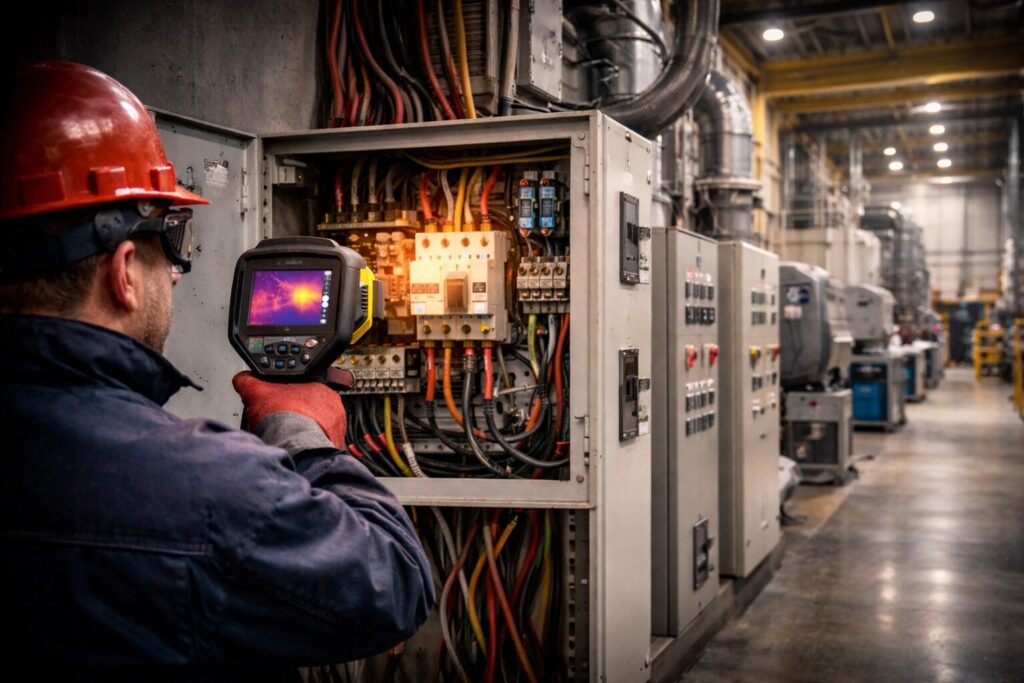
3. Predictive Techniques Importance: There’s a clear emphasis on the role of predictive techniques in determining equipment condition and necessary maintenance actions. Risk and facilities managers should consider implementing or expanding the use of predictive techniques, such as vibration analysis, oil analysis, airborne/structure borne ultrasound examination, motor circuit analysis, and particularly thermographic inspection.
4. Monitoring System Notifications: Unaddressed notifications from continuous monitoring systems play a significant role in equipment condition assessment. Ensure that these systems are functioning correctly and that their alerts are promptly addressed.
5. Enhanced Recordkeeping: With the changes in equipment conditions and inspection frequencies, comprehensive and accurate recordkeeping is more crucial than ever. This will help in tracking the maintenance history, assessing the equipment condition, and planning future maintenance cycles and activities.
6. Training and Education: Given the significant changes in this edition of NFPA 70B, training for maintenance personnel on the new requirements will be essential. This training should cover the new equipment conditions, the revised inspection frequencies, and the use of predictive techniques.
7. Increased Safety: The primary goal of these changes is to increase safety. By adhering to these new guidelines, risk and facilities managers can help prevent electrical accidents, enhancing the safety of personnel and the reliability of their facilities.
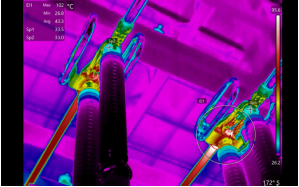
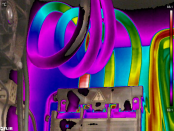
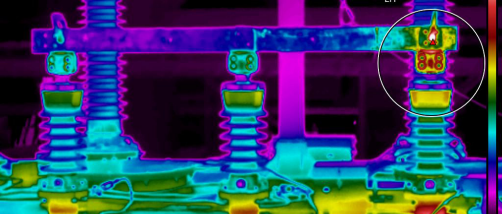
Infrared in action: High temperatures in this high-voltage switching equipment could have been catastrophic as a fire could have spread and tracked along the bus cable, easily reached the roof above. Luckily, Global Risk Consultants found the issue and alerted the risk managers.
Quantifying Infrared Findings
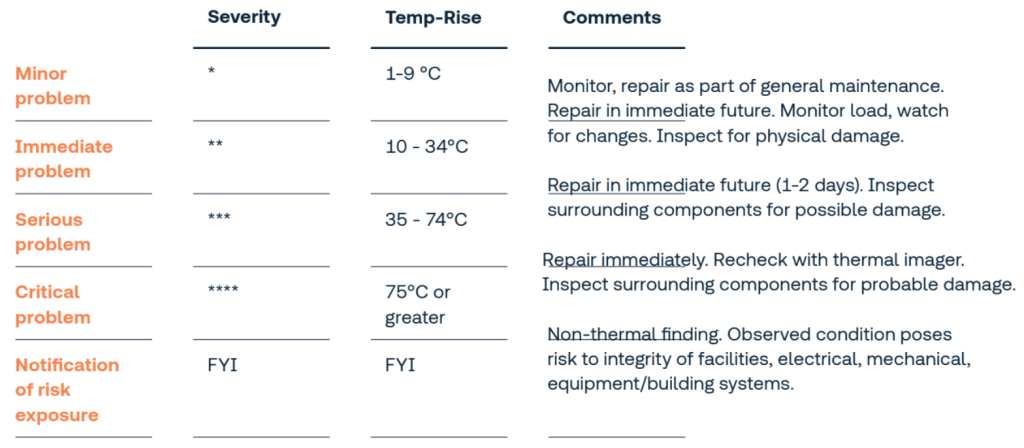
Organizations can interpret infrared findings in terms of both their severity and impact. Severity determines “how serious” a finding is from a thermal temperature threshold perspective. This involves measuring the actual temperature of an objective and its temperature rise against a reference point, with suggested limits and actions outlined in the indicator charts.
Optimizing the Effectiveness of Infrared Inspections
Infrared thermography inspections are not simple tasks to complete. In order to cover all areas of a facility, access to electrical rooms and machinery space is essential.
While there is no set “best period” for conducting IR inspections, there are many factors to take into considera tion for optimizing the effectiveness of thermographic inspection work. In general, routine annual infrared
thermographic inspections are recommended prior to shutdown, so any anomalies identified can be adequately repaired, and spare parts can be pre-ordered with ample time, to further prevent an unplanned shutdown, business interruption or outages.
Depending upon the facility’s operations (heavy industrial, chemical, power generation, cement, wood working, mining, semiconductor, food & grain, etc.) age of facility’s electrical systems, environmental conditions, dust/contaminants control, building age and age of electrical systems, criticality of facility’s operations (bottleneck potential), preventive vs. predictive maintenance programs in place, loss frequency, site specific conditions or many other factors warrant more frequent inspections may be recommended. Through the analysis of facilities’ production, process, operations, and utility systems, faults and loss exposures can be identified and quantified so that measures can be implemented to mitigate them.
Additional Guidelines on Optimizing the Effectiveness of IR Inspections
Mechanical

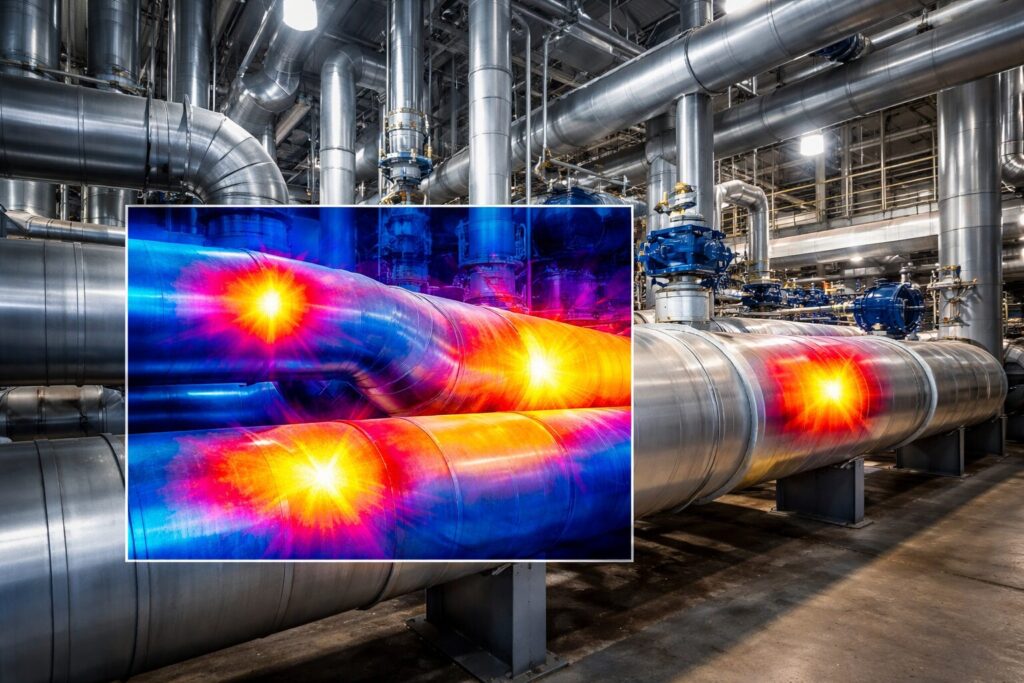
These inspections should be conduc ted in conjunction with electrical thermography to include: electric motors, bearings and couplings, compressed air systems, HVAC, critical refrigeration systems, fluid systems (tank levels, pipe temps, blockages), refractory systems (boilers, ovens, furnaces, dryers), con veyor belt rollers, steam systems (i.e. traps), etc.
These inspections should also be conducted along with other inspec tion techniques, such as vibration and lubricating oil analysis.
A quarterly inspection program will offer the most robust results.
Electrical

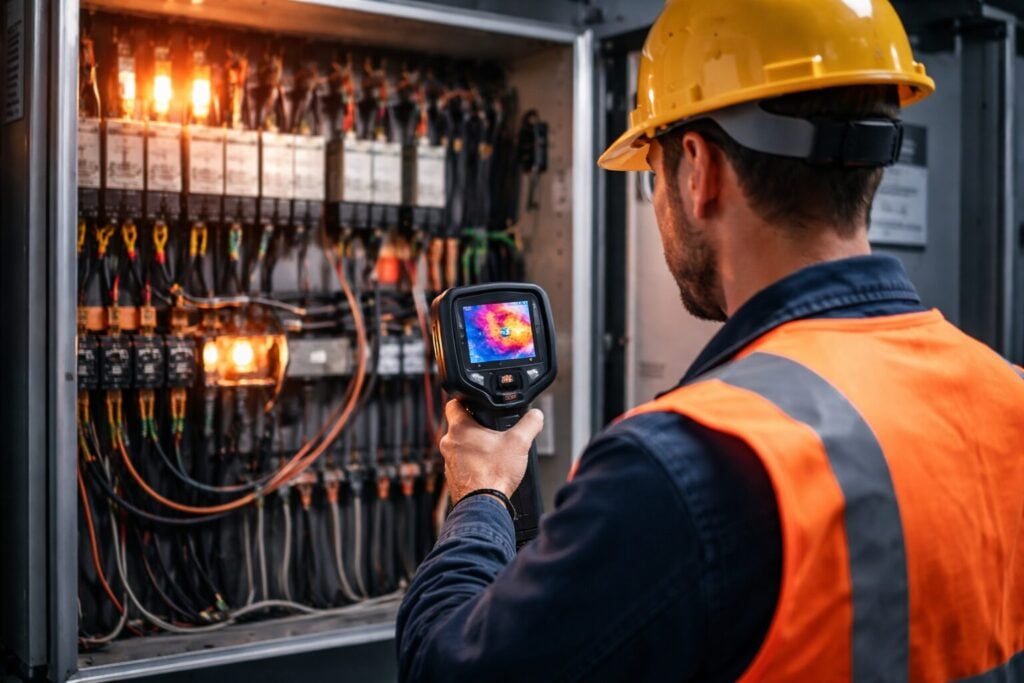
Deep dive electrical studies should be conducted using infrared thermo graphy to include the following: incoming utility services, substations, incoming primary switches, oil-filled and dry-type transformers, primary and secondary switchgear and switchboards, bus ducts and race ways, motor control centers (MCC’s), production machinery control panels and cabinets, fused and unfused disconnects, capacitor banks, contactors, motor starters, variable frequency drives (VFD’s), relays, etc.
Regular inspections should be conducted to ensure corrective actions to faults have been rectified.
It is ideal to have in place a minimum annual inspection program that can be increased where findings and anomaly trends identify increased risks and hazards, mean-time-bet ween failure mode, etc.
Additional electrical inspections should include onsite evaluations of critical electrical equipment, transfor mer oil analysis, switchgear maintenance, electrical protective device testing, arc-flash, short-circuit and protective device coordination studies, motor circuit analysis, megger testing, hi-pot (high-potential or dielectric withstand) testing, ground-fault, etc.
Process Equipment
Inspections should be done alongside mechanical inspection work as it is usually synonymous with mechanical supplies. Cursory inspections should be given to steam pipework in order to identify any breakdowns in difficult-to-reach areas of the site.

Follow-up inspections
Follow-up inspections should be done immediately upon corrective action, or as soon as possible if the condition cannot be remedied immediately due to extraneous factors. This ensures the fault is fixed and acts as quality assurance for the rectification process.